
The Armchair Philosophers are the wonderful people who answer your questions. Though diverse in many respects, they are united by their love for and postgraduate degrees in philosophy.
If you have a question for the Armchair Philosophers, don’t hesitate to get in touch. You can find us on X (formerly Twitter) @armchair_o or fill in this form.
If you like what we do, you can support us by buying us a coffee!
I received my PhD in philosophy in 2017; my dissertation was called “Plato's Bastard” (published as “Phenomenology as Platonism” [Phänomenologie als Platonismus]). My areas of interest are phenomenology, metaphysics and their overlap; but I dabble in whatever field I feel like – and with whoever's up for it. Philosophy to me means questioning our presuppositions, which fascinates me because it is something we can do whenever anyone says anything about anything and it never gets boring or old; it's also something that's painfully absent from public discourse, but easily learned. Enter: public philosophy!

I did a BA in Mathematics and Philosophy at Lancaster University, followed by an MPhil in Philosophy at the University of Warwick. I spent a lot of time studying Kant (his first Critique), the philosophy of mind, and the philosophy of language. My favourite philosophical idea is Quine's idea that the common-sense theory about physical objects and the gods of Homer are both just posits; the only difference is that the theory of physical objects turned out to be more efficient – that was the last idea to truly blow my mind.

I have been doing philosophy since 2012 and am currently working on my PhD at the University of Kent. I have a BA from Oklahoma Baptist University and an MA from the University of Florida. I am currently most interested in ethics-related issues of various kinds. My favorite works of philosophy, at present, are Aristotle's Nicomachean Ethics and, for very different reasons, David Enoch's Taking Morality Seriously.
I completed my MA and PhD at the Philosophy Department of Boğaziçi University. My main areas of research are history of philosophy, social and political philosophy, and moral philosophy. My dissertation was on Kant's account of conscience, so I had to work through most of Kant's texts. He is my favorite philosopher because he revolutionized the philosophical scene in Europe and still continues to be influential to this day. He was one of the first philosophers to work out a comprehensive system which integrates several areas of philosophy, and he has given me a remarkable sense of what philosophy can be.
I studied at the University of Lancaster (1999-2003) where I gained a BA Hons in Religious Studies & Philosophy, and a MA in Religious Studies. I gained my PhD in Religions & Theology at the University of Manchester (2004-2010) and the thesis was published by Gorgias Press as Antitheodicy, Atheodicy and Jewish Mysticism in Holocaust Theology (2012). I lectured for four years at the University of Manchester in the Department of Religions & Theology (2013-17) where I taught the History of Western Philosophy among other courses. I particularly revere the thought of Parmenides, Descartes, Spinoza, Kant, and Peter Kingsley.
I’ve taught university philosophy since 1998, including courses in history of philosophy, ethics, government and politics, religion, and multidisciplinary topics. My Ph.D. in philosophy is from the University of Essex. My academic research in social and political philosophy is on applying normative and applied ethical issues to increase understanding of social injustices and the responses to them. I explore how recognition theory and phenomenology can help us understand personhood, identity, injustice, social conflict, and social justice. Today, I teach part-time to devote more time to research and writing.

I did my BA in Philosophy & Creative Writing at London Metropolitan University, then completed MAs in Continental Philosophy at Warwick University and Social & Political Thought at Sussex University. I started (but didn’t complete) a DPhil at Sussex University, and have taught at Sussex, King’s College London and Birkbeck. I am particularly interested in political philosophy (both analytic and continental) and have studied modern philosophy (especially Descartes and Hume), Existentialism, Phenomenology, Critical Theory, and post-structuralist thought. I am most interested in the ancient Greek practice of parrhesia (the art of speaking frankly), as I think it is something we need very much right now.

I have a Masters degree in Philosophy from the University of South Carolina where I wrote a thesis on Immanuel Kant’s political philosophy under Konstantin Pollok. I am currently doing a PhD at the University of Groningen (the Netherlands) in the project “Universal Moral Laws” under Pauline Kleingeld. I am interested in Kant’s legal and political philosophy as well as contemporary jurisprudence and republicanism. Predictably, then, my favorite philosophical work is Kant’s Groundwork to the Metaphysics of Morals. This work contains, in my mind, some of most important ideas for the possibility of universal and objective moral laws.
I am a Lecturer in Liberal Arts & Politics Education at King’s College London. I completed my MPhil in Philosophy at the University of Warwick, and BA in PPE at Queen’s University Belfast. My PhD examined the relationship between contemporary capitalism and mental health. My key interests are in the politics and philosophy of time, political theory, philosophy of technology, the politics and philosophy of education, and experimental pedagogy. My favourite text is Deleuze’s Difference and Repetition. And my favourite quote, by Democritus: “This argument too shows that in reality we know nothing about anything, but each person’s opinion is something which flows in (epirusmiē).”
I did a BA in Philosophy and Literature at the University of Warwick, an MPhil in Philosophy at Warwick and am about to start a PhD in Philosophy at… Warwick. My primary research interests are the philosophy of cognitive science, philosophy of mind and the ontology of concepts (basically I want to know what concepts are). Immanuel Kant is the source of much inspiration for me. My views on cognition are overtly Kantian and I’m pretty sure he solved the whole idealism thing with transcendental idealism, the only sensible position one can take.
I teach philosophy at St. Louis Community College, Meramec. I have an associate's, bachelor's, master's, and doctoral degree in philosophy. I love thinking about knowledge (the field called "epistemology") and ethics (especially taking interest in convincing people to do the right thing for the right reason). My heroes include Socrates and Kant.

I am an expert on the human condition. I did an MPhil in Philosophy at KCL. My PhD at Oxford is on the significance of Hume’s philosophy of law. The core idea is that law's ultimate point is reducible to the interests of society. I run a coaching business called The Philosophical Coach. I host the podcast, 'This Humean Life', which tackles the nuances of being human – exploring how thoughts and language create our reality and why identity is never as fixed as we assume, and covering topics such as mental health, failure, relationships, masculinity, joy, business.

I am a PhD candidate in Political and Social Thought at the University of Kent, Canterbury. I am researching modern Western cosmologies and approaches to organicism. My interests lie in the area of continental political thought, process ontologies and the philosophy of technology. My favourite philosophers are A.N. Whitehead and F.W.J. Schelling, whom I admire for their organic systematizations of nature and natural knowledge.
I did an MEng in Civil Engineering at Cardiff University and an MA in Philosophy at the University of Warwick. I spent some time studying Nietzsche and the history of philosophy, but since then I have focused mostly on the philosophy of mind and philosophy of emotions. One of the most recent ideas I have found interesting (and crazy for our standards) is the revision of panpsychism (coming in varieties like protopanpsychism). This is the view that mental properties may ultimately be fundamental like physical properties. If this is right, then it may be that in the future, psychophysical laws are going to explain the conscious experiences associated with the physical processes explained by physical laws.

I did a BA in Philosophy at the University of Bologna, followed by an MA, MPhilStud and PhD at Birkbeck, University of London. I currently work at Birkbeck and King’s College as a teaching assistant, delivering seminars to CertHE, BA and MA students. My areas of expertise are political philosophy, ethics and gender. I am also interested in business ethics, ethics of science and technology, applied ethics and politics, and the history of political thought. My research focusses on liberal multiculturalism, autonomy and vulnerability. I am fascinated by the idea of freedom, its history, and its recent developments in political theory.

I have studied philosophy since 2010 at Adam Mickiewicz University in Poznań (I do not like moving). Currently, I am trying really hard to finish my Ph.D. thesis concerning the concept of the technical object in contemporary continental philosophy. I mostly work in the field of philosophy of technology, poststructuralism, critical theory, and posthumanism. Personally, I am a big fan of relational ontologies. I believe that the "essence" of things is only a consequence of their relations to other entities. I haven't published much in English, but check my Academia profile or contact me if you are interested in my research.

I did a BSc in International Politics and then an MA in Continental Philosophy. My main influence is Nietzsche, who mentions that in order to properly understand not only humanity, but also the world we live in, we have to engage in the “naturalisation of humanity” and the “de-deification of nature.” Understanding this is crucial if we want to find better and more realistic ways of living alongside one another.
I studied in Geneva and Paris (University of Geneva and École Normale Supérieure) and I specialized in the philosophy of emotions, especially in the relationship between affective states and memory. My master's thesis dealt with nostalgia and represented an attempt to establish a general philosophical theory of this rich and complex emotion. Other areas of interest include moral emotions, metaethics and metaphysics, with a penchant for fictionality. I do not have any specific philosophical arguments in mind; however, I find that the works of Russell, Popper and Kripke are a must-read.

I think I began studying philosophy seriously in 1987 when Optimus Prime died seemingly for nothing at the hands of Megatron. Twenty years later I finally earned a Master’s degree, but I never did work out whether it was Hot Rod’s fault for intervening in the fight or Optimus Prime’s for not taking the shot when he had the chance. Consequently, these days I am quite the cocktail purist. The one real regret in my life is that I once saw someone order a gin martini on the rocks and I did absolutely nothing to stop it.
Having studied philosophy at both undergraduate and postgraduate level at the University of London, Birkbeck College, I am now an employee of the Erasmus School of Philosophy, Rotterdam, where I work as both a teacher and junior researcher in philosophy. Currently I’m engaged in a NWO funded project in social choice theory, looking specifically at personal preference and resource depletion. I see philosophy as an interconnected whole and so I tend to read widely. I also think – like many of my colleagues – that philosophy is sorely absent from much of public discourse. But, then again, I would say that…

I am a masters student in philosophy (and in psychology) at the University of Graz, and a research assistant at the section of practical philosophy. I am mostly interested in ethics in the broadest sense (metaethics, normative ethics, applied ethics, especially climate ethics and animal ethics), but I am also a fan of breaking the boundaries between practical and theoretical philosophy and of empirical approaches to philosophical questions. My favourite philosophers are Shelly Kagan and Alastair Norcross because I like act-utilitarianism and people who write in a clear and concise (and entertaining) manner. I am also into politics, literature, and sports (Brazilian Jiu Jitsu).
I got my BA and MA degrees in Philosophy at Boğaziçi University, Istanbul. Currently I am a third year PhD student and a full-time research assistant in the same department. I am mostly interested in normative ethics with a special focus on rule-consequentialism. I am most amazed by David Hume's and Immanuel Kant's ideas; for me, these two philosophers dealt with many philosophically meaningful questions that are still relevant today.
I am studying for a Master’s degree in Legal and Political Philosophy at Utrecht University in the Netherlands. I am mainly interested in existentialist ethics and politics. My favourite philosophical work is The Ethics of Ambiguity, by Simone de Beauvoir, where she advances the idea that human beings are characterised as individuals by the projects they undertake.
I started studying philosophy at the University of Glasgow back in 2011. I was officially a psychology student back then, but I jumped ship almost immediately, and now I'm working on my PhD at the University of Kent. My interests sit mostly in moral and political philosophy, but I have that magpie-like tendency to dip into all the areas of philosophy I know less about as soon as I see a shiny idea. My research focuses on autonomy in mood disorders, pulling together moral psychology, some phenomenology, and moral philosophy. I've also been getting more and more interested in Epistemic Injustices recently (which ties in nicely with my core research), so for now that might be my new favourite area in philosophy.
I studied philosophy at the University of Stirling, earning my degree in 2005 and a Master's in Knowledge & Mind in 2007. I first became interested in epistemology after snaffling a copy of Descartes’ Meditations off my brother while still at school, and it sparked all kinds of ideas in my mind so I just had to find out more. These days I like finding philosophical ideas hidden in movies, song lyrics and other everyday places people don’t expect. It’s not all high-brow beardstroking theory, but if you start small you might like where it can take you.
I studied philosophy at the universities of Lausanne, Vienna and Bern, and I am currently finishing my PhD thesis on the concept of political consent (what does it mean to consent in politics?). My areas of specialization lie in early modern philosophy and contemporary political philosophy. I also have a keen interest in ethics, Ancient philosophy, and public philosophy. Thomas Hobbes would be my favourite philosopher, not because I agree with all of his conclusions, but because I love the clarity, precision and comprehensiveness of his writings.

I am a post-graduate researcher and teaching assistant in the Philosophy Department at Mary Immaculate College in Ireland. I obtained my undergraduate and master’s degrees, both interdisciplinary in philosophy and religious studies, from Arizona State University in the United States. My doctoral dissertation (and passion) establishes a theodicy embracing Stoic philosophy as an enhancement to one’s understanding of the problem of gratuitous suffering in the world, and centers on philosopher John Hick’s use of St. Irenaeus’ early Christian theodicy. My expertise include hermeneutics and ethics, and my interests extend to ancient religious cults and early monotheism.

I have a Bachelor's degree in Engineering and a Master's degree in philosophy. I am currently pursuing a PhD in philosophy from the Indian Institute of Technology Bombay, India. I am interested in ethics and epistemology and especially in areas at the intersection of these fields. My favourite philosophical idea is Wittgenstein's notion of family resemblance, which claims that when things appear to be similar, instead of sharing one essential feature, there might be a host of overlapping similarities. The idea really helped me work out definitions better and not get stuck at necessary and sufficient conditions.
I received my BA in philosophy from the University of Chicago and my PhD from the University of Notre Dame. I specialize in ethics, with a particular focus on the nature of normative reasons and the ethics of hypocrisy in its myriad forms. My favorite philosopher is Henry Sidgwick, since I believe—to borrow a line from Alfred North Whitehead, speaking about Plato—that much of analytic ethics in the 20th century is a series of footnotes to Sidgwick.

I did a BA in Philosophy and Psychology followed by an MA in Philosophy at Durham University. I am currently pursuing a PhD in Philosophy at the University of York, focusing on phenomenological aspects of the experience of depression. My areas of specialization are phenomenology, existentialism, and philosophy of religion. I spend some of my free time working on my philosophy podcast, Premise Podcast. If I had to pick a favourite philosopher, it would be Jean-Paul Sartre.
I did my BA in Rome, Università La Sapienza, where I graduated with a thesis about the contemporary debate on personal identity. I am now doing my Research Master’s in Philosophy of Mind at Radboud University, Nijmegen, The Netherlands. I am specifically researching how digital environments (and especially social networking sites) influence our understanding of the world and of others. I like Wittgenstein and theories of extended cognition, which argue that items external to the brain can constitute cognitive processes. I am fascinated by the idea of the cyborg and how the digital revolution is changing our understanding of the world.

I am an Associate Lecturer in Philosophy at the University of York. I did a BA in Philosophy and Divinity at the University of Aberdeen. During my MA, also at Aberdeen, I studied the history and foundation of quantum mechanics, and metaphysics and science in the 17th century. I completed my PhD at the University of York in 2018, with a focus on the epistemology, theology, and political philosophy of John Locke. I am also interested in ethics, the history and development of natural law theory, and Neo-Platonism in the 17th century. More recently, in the spirit of Neo-Platonism, I have started working on Damaris Masham and Anne Conway. This has led to a growing interest in other women in the history of philosophy that have often been ignored…
I completed a BA Philosophy (Lancaster) and MA Philosophy (Birmingham). I am due to speak on Plantinga and extended mind cognition, at the Tyndale Conference 2021. I have accepted a place on a Ph.D course starting in 2021, in the philosophy of science. My favourite philosophical idea is necessity de re(the necessity ‘about the thing’), which looks at whether things have essences (essentialism). It is surprising that in the 20th century, modal logic, which is the logic of necessity/possibility, has intellectually motivated two areas: God’s existence (with new modal ontological arguments) and human nature. Perhaps the two are connected!
I am a PhD student at the University of Southampton, having previously done an MRes Philosophy at the University of Reading and a BA in Philosophy and Political Science at Otto-Friedrich-University in Bamberg. I specialize in moral and political philosophy. Thinking about the future fascinates me, and I enjoy teasing apart concepts like rights, risk, harm, and benefit, and thinking about what they can tell us about challenges like climate change.
I am a researcher at the University of Cologne. Many topics in analytic philosophy intrigue me, but my main interest is in the philosophy of causation. I am especially excited about the idea that causation is just a pattern of correlation that is insensitive to different kinds of disturbances. My PhD dissertation argued that such a view on causation helps to resolve an age-old puzzle: if mental phenomena are not physical, how can they affect our behaviour? Currently, I investigate other puzzles about causation, such as ‘can absences cause?’ and ‘why does causation never go backwards in time?’

I did a BA in Philosophy and Politics at the University of Exeter, and I am now pursuing an MA in Philosophy at the New School for Social Research, New York. I have read a lot of Nietzsche and I have studied Philosophical Anthropology for a while, but I am now focusing on Gender Studies. I am also interested in Ancient Greek philosophy, and I study Ancient Greek. My favourite philosophical idea is Nietzsche’s concept of life-affirmation and his critique of Christianity. I also like provocative texts like Valerie Solanas’ SCUM Manifesto.
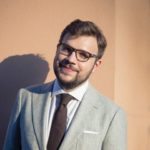
I did a BA and MA in Philosophy at the University of Warsaw, where I focused on philosophy of technology, hermeneutics and social philosophy with a Marxist slant (which I was suprisingly able to combine in my MA thesis on Gianni Vattimo). I am currently working on a PhD at Dublin City University, where I research self-tracking technologies and practices from the perspective of virtue ethics. My favourite philosophical idea is that our understanding and beliefs change across history and cultures together with material circumstances and the interpretative context – they are ultimately the result of our choices and critiques.
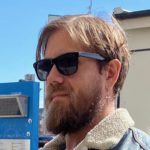
I received a BA in philosophy from the University of Texas at El Paso in 2008. After that, I spent roughly a decade traveling Europe and North America as a touring musician. Now I am working on a master’s in philosophy and philology at the University of Gothenburg in Sweden with the goal of teaching at the university level. Some specific areas of interest include medieval grammar and free will. Michel Foucault’s approach to the history of philosophy has been a huge influence on me, and his work on notions of the self and power structures bring history to the present.